Tampilkan postingan dengan label Software. Tampilkan semua postingan
There are ways by which you can run Adobe Photoshop in Linux Ubuntu like running Photoshop through WINE or setting up a virtual box inside your Linux system and running Windows in it to run Adobe Photoshop. But both of have some issues. With WINE, the setting up of Photoshop is a complex process and some features might not work. With setting up of virtual box, you will eventually need Windows License to install and run Adobe Photoshop.

GIMP logo
GIMP logo


So what's the way forward? Choose an open source alternative to Adobe Photoshop. Though Photoshop is a highly used and polished software and it's impossible to have a software of that excellence, but with the below alternatives you can very much perform all tasks that you can in Photoshop. Let's see the best Open Source Photoshop alternatives for Ubuntu / Linux : GIMP.

GIMP 


GIMP is an acronym for GNU Image Manipulation Program. It's a cross platform image editor for Linux / Windows / OS X, is free and open source and does almost all the things you need. There are various third party customization options and plugins developed for GIMP that will help you in the process. GIMP provides high quality photo manipulation - from retouching to restoring to creative composites. Some of the GIMP features include Customizable interface, photo enhancements, digital retouching, various hardware support and supports most of the file formats. With large numbers of professional-level editing tools and filters, you can edit, enhance, retouch photos, create drawings etc.

You can download the current Stable version from GIMP website : https://www.gimp.org/downloads/

GIMP is available in various languages and provides the best alternative for Adobe Photoshop for a Linux environment (and even to Windows / OS X if you do not wish to spend $$$).

Installing GIMP in Ubuntu


You can install GIMP in Ubuntu through the Ubuntu Software Center. Open Software Center and search for GIMP Image Editor. Click on install and it will install GIMP in your Ubuntu System. 


Installing through command line:

Open Terminal (Ctrl + Alt + T) and type the following command : 

sudo apt-get install gimp

This will install the current stable GIMP in your system. You can launch it from the Graphics filter in Application Lens in the Dash. Alternatively, you can type gimp in terminal to launch the application.

I'm clearly not a good photo editor :D 

Installing GIMP in Linux Mint 


Most probably, GIMP is already installed in your Linux Mint. If it isn't, open the software manager and search for GIMP and you can install it from there. 

You can install it through the terminal too by typing

sudo apt-get install gimp

Let us know in the comments if GIMP is a perfect alternative for Photoshop for you.
Skype is one day to day software for me that helps me to be contact with my family and friends through video calls. Though there are many alternatives these days, Skype is still my first preference when I need to see someone. In this article, we will see how to install Skype in Ubuntu 16.04. Skype is not available officially in Ubuntu Software Center so you won't be able to install it from there if you have installed Ubuntu 16.04 LTS Xenial Xerus. However, Microsoft has made available Skype for Linux and all you need is Linux version 4.3. Let's see how can we install Skype in Ubuntu 16.04.


System Requirements 

These are the basic system requirements to install Skype in Linux Ubuntu 16.04.

  • 1 GHz processer
  • 256mb RAM
  • 100mb free space
  • Video card driver with Xv support
  • Microphone and a video camera.

There is no official release for Ubuntu 16.04. In fact the last Ubuntu version it supported was 12.04. It's available via partner repositories and you will need to enable it before you can install Skype. 

How to Enable Partner Repository

Open Software & Updates and under Other Software tab, check Canonical partners, for installing the software packaged by Canonical for their partners. 


Installing Skype in Ubuntu 16.04

Once done, open terminal and type in the following command to install Skype in Ubuntu 16.04.

sudo apt update
sudo apt install skype

It will ask for packages to be downloaded, select yes and continue. The procedure will download and install Skype in your system.

Once you are done, you can launch Ubuntu from the Dash Search. You can pin it to the software launcher. In case you don't like the default launcher in left pane, here's  how to move Unity launcher to bottom in Ubuntu 16.04.


This is by far the easiest method to install Ubuntu. There are other ways too, by downloading through third party PPAs, downloading and compiling things on own. 

Let us know in the comments, how you installed Skype in Ubuntu 16.04.

Read : How to Install Ubuntu Restricted Extras in 16.04
Once you have downloaded the Fedora 24 ISO file, you will need to burn it to a DVD or create a live USB. Burning to a DVD is simple process in Windows and right clicking on the ISO file and choosing burn to disc will do the job for you. A live USB can be used to try out the Fedora OS without installing it, or can be used to install as a primary OS or in a dual boot with Windows. That depends on your choice and preference. Here's how you can create a Fedora 24 live USB boot device. 

In Windows 10 host.


Download the liveUSB Creator from Fedora website : https://fedorahosted.org/liveusb-creator/

Once the download completes, trigger the installation set up and finish it. 

Launch the installation, and select the live CD image and the target device which will be the Pen Drive. 


You can also download the Fedora version if you do not have the ISO file already downloaded. 

Live USB creator works perfect in Windows 10 and is a complete non-destructive install i.e. you do not need to format or remove data from your Pen Drive and it won't harm the already present data there. 

It also supports the automatic downloading the various Fedora releases and the application will automatically detect all of the removable devices. 

Live USB creator allows the persistent storage creation, i.e. lets you allocate extra space on your USB stick where you can save files and changes in the OS which will persist in the next boot. 

Creating live USB for Fedora from Ubuntu


The first way to create a Fedora 24 live USB is by using the Unetbootin software. You can download the Unetbootin software from the Ubuntu Software Center. Unetbootin allows for the installation of various Linux/BSD distributions to a partition or USB drive, so it's a no different from a standard install, only it doesn't need a CD. It can create a dual-boot install or replace the existing OS entirely. Once you launch the software, you will get the below screen.


Select the desired Distribution and the Version, navigate to the path where you have stored the ISO diskimage which you have downloaded. Select the type which should be "USB Drive" and drive of the removable media. Once done, click OK and a live Fedora 24 bootable USB drive will be created which you can use to try / install Fedora 24.

Second method to create a live USB for Fedora 24 is through the command line. 

Plug in the USB disk and find out the disk its mounted on.

sudo fdisk -l

For me, it was /dev/sda3. Next step is to unmount this device

unmount /dev/sda3

Format the pen drive before you create the bootable disk and use the isohybrid command for an ISO to be recognized by the BIOS.

sudo mkdosfs -n 'driveName' -I /dev/sda3 -F 32
isohybrid filename.iso

Next step is to create the live USB from the ISO file. Use the dd command : 

sudo dd if=filename.iso of=/dev/sda3 bs=4k

Once done, you can sync and eject the device.  

sync
sudo eject /dev/sda3

Once you are done with creating live USB for Fedora 24, you can try installing Fedora 24 in Virtual Box. You can return to the complete installation for Fedora 24 for other details. 
Wine 1.9.13 development release is now available to download and install for Linux users. This new release includes various bug fixes but since this is not a stable release, there may be some new bugs along the way. 


If you are a Linux users, chances are very less that you have never heard of Wine. Wine is a Linux application that helps in running several Windows Application in Linux by translating Windows API calls into POSIX calls on the fly, eliminating the performance and memory issue. This is a popular tool which Linux users use to run Windows based games on Linux. Also, to install Adobe Photoshop cs6 in Linux. However, we as a open source enthusiasts will ask you to use Best Photoshop alternative for Linux.

What new in Wine 1.9.13 development release

  • New version of Gecko engine based on Firefox 47
  • More shader Model 5 support in Direct3D
  • Unicode data updated to Unicode 9.0.0
  • Improvements to GDI paths and metafiles
  • More progress towards the Direct3D command stream
  • And various bug fixes. 


How to Install Wine 1.9.13 in Linux 


Ubuntu 

Open terminal and type the following commands to install Wine in Linux Ubuntu.

Enable 32 bit architecture.

sudo dpkg --add-architecture i386

Add the repository and update package.

sudo add-apt-repository ppa:wine/wine-builds
sudo apt-get update

Install the development branch.

sudo apt-get install --install-recommends winehq-devel

Debian

Enable 32 but package and install key which was used to sign packages:

sudo dpkg --add-architecture i386 wget https://dl.winehq.org/wine-builds/Release.key
sudo apt-key add Release.key

Next add the repository to /etc/apt/sources.list or create a *.list under /etc/apt/sources.list.d/ with the following content:

deb https://dl.winehq.org/wine-builds/debian/ DISTRO main

// replace DISTRO being either wheezy, jessie, stretch or sid

To avoid problems with missing dependencies, Wheezy users need to add the following to /etc/apt/sources.list if it's not already there.

deb http://ftp.de.debian.org/debian/ oldstable main

update package and install Wine 1.9.13

sudo apt-get update
sudo apt-get install winehq-devel

Fedora 23

Add the repository 

dnf config-manager --add-repo https://dl.winehq.org/wine-builds/fedora/23/winehq.repo

and type in the following command to install Wine 1.9.13

dnf install winehq-devel

Megeia

Install key which was used to sign package:

wget https://dl.winehq.org/wine-builds/Release.key
sudo rpm --import Release.key

For Mageia 5 32-bit

sudo urpmi.addmedia "WineHQ 32-bit" https://dl.winehq.org/wine-builds/mageia/5/i586/

Mageia 5 64-bit

sudo urpmi.addmedia "WineHQ 64-bit" https://dl.winehq.org/wine-builds/mageia/5/x86_64/

Install package for development branch:

sudo urpmi.update -a
sudo urpmi winehq-devel

If you are using any other distribution, let me know in the comments how you installed it, and I will add it to this list. 

If you have a series of photographs/images which you want to use as your Desktop Wallpaper as a slideshow in Ubuntu, you will need to have Shotwell - an application that is installed by default in Ubuntu.

Login in to your Ubuntu system and search for Shotwell in Ubuntu.

ubuntu wallpapers

Navigate to File > Import from a folder, and select the images you want to set as desktop background in slideshow.

Once you have imported, select the pictures from the collection.


Now navigate to File > Set as Desktop Slideshow. It will ask for the time duration for which you want to set one particular image. Select according to your preference and you are done.

ubuntu wallpapers


Variety - for creating desktop wallpaper slideshows in Ubuntu/Linux


There is another open source application for changing wallpaper in Linux named Variety. It is packed with great features and is easy to use. The advantage of Variety over the Shotwell is that not only you can create wallpaper slideshows from your local images, but also from online sources and allows you to rotate them on a regular intervals and provides easy ways to separate nice images from the junk. It also can display a nice digital clock.

How to install Variety on Ubuntu

sudo add-apt-repository ppa:peterlevi/ppa
sudo apt-get update
sudo apt-get install variety variety-slideshow

Variety not only runs for Ubuntu, but also supports most Ubuntu variants like Xubuntu, Lubuntu, Linux Mint and also on some other Linux distributions like Arch, Fedora and Debian.
LibreOffice 5.0.4 logo
Its been more than a month now since LibreOffice 5.0.4 has been released and is now available for download and upgrade. LibreOffice is a free and open source office suite, an open source alternative to Microsoft Office developed by The Document Foundation available for different Operating Systems like Microsoft Windows, Mac OS X, and Linux. Originated from OpenOffice.org in 2010, it is now the most widely used office suite for Linux users. The LibreOffice suits includes word processor, spreadsheets editor, slideshow creator, diagrams and drawings creator, database and mathematical formula support.

LibreOffice is available in 110 languages and is compatible with other office suites like Microsoft Office and OpenOffice.Org. So, before we see how to download and install LibreOffice in your system, lets see what is the system requirements. LibreOffice 5.0.4 is the latest release which includes bugs fixes from the last release is much more stable.

System Requirements for LibreOffice 5.0.4

Windows

  • Microsoft Windows XP SP3, Vista, Windows Server 2008/2012, Windows 7/8/10.
  • Pentium III or above processor
  • 256 MB RAM (512 MB is recommended)
  • 1.5 GB of free storage
  • 1024x768 resolution or higher.

Apple -Mac OS X

  • Mac OS X 10.8 or higher
  • Intel processor with 512 MB of RAM and 800 MB of free disk storage
  • 1024x768 graphic device or higher resolution

GNU/Linux

  • Linux kernel v2.6.18 or higher
  • glibc version 2.5 or higher
  • gtk version 2.10.4 or higher
  • 256 MB RAM - 512 MB is recommended
  • 1.55 GB of free storage.
  • Gnome 2.16 or higher.
  • X server with 2014x768 resolution, or higher

How to download/install LibreOffice 5.0.4 in Windows

Download LibreOffice for Windows from the official website: LibreOffice for Windows

Open the installer by double clicking it, and follow the steps through the set up.

The typical set up will install the default components including user interface languages and spelling dictionaries matching your current language settings.

In Custom Installation, you can choose the program features you want to install and the path of installation.

In the File Type dialogue box, you can choose the LibreOffice to be the default application for Microsoft Office file types.

Click on next and Finish. You have now successfully installed LibreOffice in your Windows PC.

Download LibreOffice for Mac OS X

Download the .DMG file from the official website: LibreOffice for Mac OS X

Double click the .DMG file. There is an installation window, drag and drop the LibreOffice icon to the Applications folder.

The installation will proceed further and notify you when completed.

Download and Install LibreOffice in Linux

Download the LibreOffice 5.0.4 from its official website: LibreOffice for Linux 

You will have a .tar.gz archive. Right click on the downloaded archive and select "Extract here".

Open your terminal, and navigate to the directory where you extracted the archive.

To install the .deb package, use the following command,

sudo dpgk -i *.deb

You can upgrade to LibreOffice 5.0.4 if you are running an earlier version by using the following commands:

sudo add-apt-repository ppa:libreoffice/libreoffice-5-0-4
sudo apt-get update
sudo apt-get dist-upgrade


Help needed: I'm need of LibreOffice screenshot for different Linux Distributions. Please mail me at bloggingwithmb@gmail.com. Sharing is caring!

Lynx is one of the best text browsers that can be used within the terminal to see any web site in plain ASCII text on the terminal itself. It do not deliver any images/multimedia/flash content and is used mainly by those who are mostly interested in reading texts and are distracted by the flash/graphical content.

Lynx text browser is also useful when you do not have a GUI installed on your Linux system. With only-text browsing, Lynx is much faster since it do not display any other bandwidth-consuming data. Navigation is done by using the arrow keys in Lynx and installing and using Lynx text browser is much easy.

It is a highly configurable text-based web browser in terminals. There is support for HTML and SSL in the latest version of Lynx web browser. Though it do not handles or renders images/videos from any web page, it can launch external programs to handle it, like an image viewer and or a video player.


Install Lynx browser in Linux


To install Lynx browser in your Linux System, use the following command in terminal:

sudo apt-get install lynx

Lynx will be installed.

Now to open any website within your terminal, type the following command:

lynx <web-address>

e.g. if you want to open beopensource.com use the following command:

lynx beopensource.com

You can use the UP, DOWN arrow keys and tab to navigate to different links in a webpage.

Lynx text browser is particularly useful for low-specification system since it do not need any GUI support.

I have installed Lynx web browser in my Linux Mint. Here's how it renders my website www.beopensource.com in terminals:


Here's what Shaun Marolf has to say about the Lynx browser. Thanks a lot Shaun.
Lynx has a good speed advantage in rendering websites. However, its only useful with information related websites where the HTML code is mostly text. Using it on a graphically intense site is self defeating. That being said, as a research tool for gathering information it shines brightly as popups, ads, unnecessary video tags and graphics are ignored and the meat of what you are trying to get is seen. It has one major weakness though as click throughs (web sites where you have to click through a pop up before you can get to the actual information) can be a severe problem with Lynx. Lynx itself is a pure HTML, XML rendering browser and where sites use Ruby and AJAX and other script based apps that Graphical Browsers can work with Lynx will not and if the functionality is needed then Lynx is useless.
Lynx is not for, nor intended for, the average Internet User. Its geared for researchers and tech savvy users and that needs to be considered. Truthfully its made for nothing but the basics.

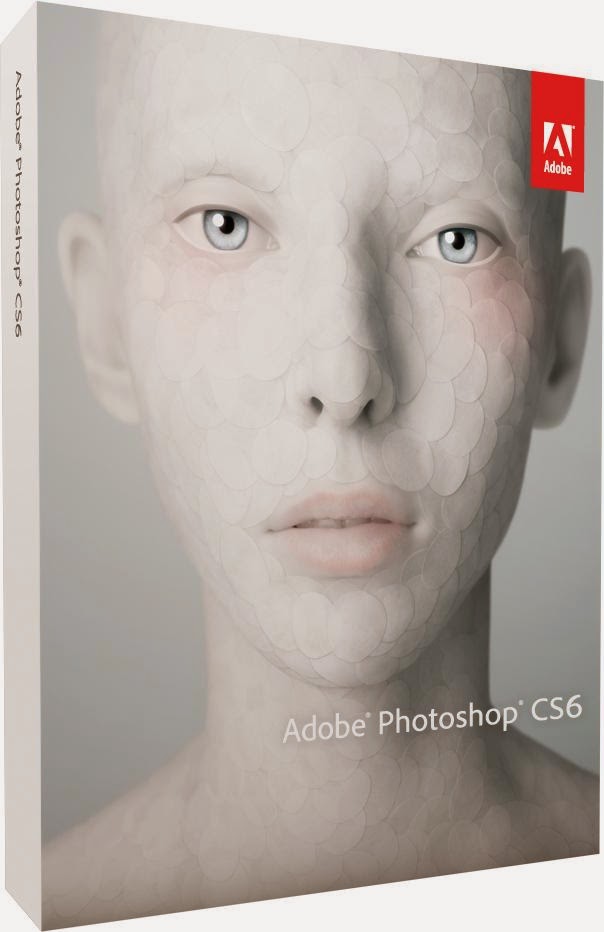
Install Adobe Photoshop cs6 In Linux Ubuntu


Adobe Photoshop is not available for Linux users. When it comes to image-editing, Adobe Photoshop is still the first choice to a wide category of users and those who are using Linux wish Adobe should work on a Linux Platform Photoshop.

However, if you still want to use Adobe Photoshop in Linux Ubuntu, you can easily do so by installing Wine and thereafter, Adobe Photoshop.

In this article, I am going to share easy steps to install Wine and Adobe Photoshop cs6 in Linux Ubuntu.

Installing Wine in Ubuntu


Before you can install Photoshop, you need to install Wine - a free Windows emulator for Linux platform. It help to run Windows softwares in Linux environment.

To install Wine:

sudo add-apt-repository ppa:ubuntu-wine/ppa
sudo apt-get update
sudo apt-get install wine1.7 winetricks

This will install Wine and update it to the most recent build, and will install winetricks too.

Now, you need to install the necessary dependencies to run Adobe Photoshop. You can do that by typing following command in your terminal.

winetricks atmlib gdiplus msxml3 msxml16 vcrun2005 vcrun2005spl vcrun2008 ie6 fontsmooth-rgb gecko

Installing Photoshop CS6 in Ubuntu

Since everything is now set up, you can install Photoshop in the same way you install it on Windows.

Right click on the Adobe_Photoshop_SetUp.exe or type the following command in terminal after navigating to the place where you have kept the setup.exe for Adobe Photoshop.

wine set_up.exe

You have successfully installed Adobe Photoshop in your Linux box. It will appear normally in your programs list.

If you do not wish to install Adobe Photoshop and want a Linux alternative for it, you may read: Best photoshop alternative for Linux: GIMP

Share your experience as to how Adobe Photoshop is working for your Linux platform if you have installed it using wine and using it.

Do you know that you do not need MS Office in Linux? Here's why. How to install Libreoffice 4.2 in Linux
Transmission is an open source BitTorrent client that is widely used by Linux users. It is also the default torrent downloader in some of the Linux distributions and comes bundled with Linux Mint and Ubuntu.

Transmission BitTorrent Client for Linux features most of the properties you would expect from any torrent downloader like encryption, web interface, peer exchange, magnet links support, DHT, Universal Plus n Play, webseed support, watch directories, tracker editing, speed limiter, and more.

Unlike other free BitTorrent Clients, Transmission is free from any pop-up ads, flast ads and default toolbars that are bundled  with torrent clients. Transmission is free and open source, you can copy, modify, redistribute and do whatever you wish with it. Transmission is free software licensed under GNU General Public License.


Main Features of Transmission - BitTorrent Client.

  • Selective Queue and downloading - You can select which torrents and/or files to download first. 
  • Magnet links support.
  • Torrent file creation and encrypted peer connections 
  • Fast resume with peer catching and moving a torrent to a different folder when the download completes. 
  •  Scheduled bandwidth limits and global, per-torrent bandwidth caps. 
  • Filtering/Sorting options. 
  • Portable Universal Plus n Play version is available. 

Download Transmission - Open Source BitTorrent client for Linux

If you have Linux Mint or Ubuntu latest release, chances are that you already have Transmission BitTorrent Client. In case, you are using some other distribution, you can download it from the given download links:

Transmission BitTorrent Client Download

You can use terminal command:

$ apt-get install transmission

to install it on Debian / Debian- based Linux distributions.

Fedora users can use the yum command to install it:

$ yum install transmission

If you are using Transmission, we would like to hear your experience. Do Share with us in comment section - what you like and what not about Transmission.
GUI programs are the easiest way to burn CD/DVD in Linux Ubuntu. Brasero is one such application that will ease your task of burning a CD/DVD for the GNOME desktop. Its an easy to use application program and is designed to be as simple as possible that enables users to create their discs easily and quickly. It is the default burning tool for GNOME desktop environments and is licensed under GNU GPL.
brasero
Features
 
Data CD/DVD
  • supports edition of discs contents (remove/move/rename files inside directories)
  • can burn data CD/DVD on the fly
  • automatic filtering for unwanted files (hidden files, broken/recursive symlinks etc)
  • supports multisession
  • can write the image to the hard drive
  • can check disc file integrity
Audio CD
  • write CD-TEXT information
  • supports the edition of CD-TEXT information
  • can burn audio CD on the fly
  • can use all audio files handled by Gstreamer local installation (ogg, flac, mp3, ...)
  • can search for audio files inside dropped folders
CD/DVD copy
  • can copy a CD/DVD to the hard drive
  • can copy CD and DVD on the fly
  • supports single-session data DVD
  • supports any kind of CD
Others
  • erase CD/DVD
  • can save/load projects
  • can burn CD/DVD images and cue files
  • song, image and video previewer
  • a customisable GUI (when used with GDL) 
  • supports Drag and Drop / Cut'n'Paste from nautilus (and others apps)
Download

You can install the CD burning application from the Ubuntu Software Center by searching "brasero" without quotes.
Alternatively, you can download releases here: http://download.gnome.org/sources/brasero/.
LibreOffice is one of the most widely used office suite for Linux users. It is a free and open source office suite developed by The Document Foundation comprising programs to do word processing, spreadsheets, presentations, diagrams and drawings, databases and much more. LibreOffice provides compatibility with Microsoft Office and the documents can be imported to LibreOffice that are developed in MS Office. 

How to install LibreOffice 4.2 in Linux

Application included in LibreOffice

Writer Similar to MS Word, it works as a word processor and can be used as a basic text editor. 

Calc A Spreadsheet program

Impress A presentation program, can be exported to swf format hence can be viewed on any system with Adobe Flash Player.

Draw A vector graphics editor and diagramming tool 

Math Designed for creating and editing mathematical formula

Base A database management system

LibreOffice is licensed under LGPLv3. 

In this article, I am going to tell you how to remove earlier LibreOffice installations and install LibreOffice 4.2 on Linux. The article mainly focus on installing LibreOffice 4.2 on Debian/Ubuntu based distributions. 

Uninstall earlier LibreOffice installation

You can install LibreOffice 4.2 along with previous versions without much problem. In case you want to uninstall the earlier version to free up your resources, 

sudo apt-get remove libreoffice-core

Install LibreOffice 4.2 in Linux

You can download LibreOffice 4.2 from the official website.

libreoffice.org/download/libreoffice-fresh/

You can extract this tar.gz file through terminal or by right clicking on it and extracting it.

After extracting, open a terminal and navigate to the current directory using cd command. Read more : Keyboard shortcuts within Terminal

Finall, install the LibreOffice package you have downloaded. 

sudo dpkg -i *.deb

To install the program shortcuts in the menu, navigate to the "desktop-integration" sub directory, and run the following command

sudo dpkg -i *.deb

Finally, you have installed LibreOffice 4.2 in your Linux system. This process will work in all Debian based / Ubuntu based distributions like Mint, *buntu, Debian etc. 
Audacity is a open source and free audio recorder and editor distributed under the GNU General Public License. Audacity is a cross-platform software available for major Operating Systems like Windows, Linux/Unix, Mac OS X and other OS and its interface is available in many languages.

Features
  • Record live audio
  • Record computer playbacks
  • Convert tapes and records into digital recordings
  • Edit common sound files
  • Cut, copy, slice or mix sound clips
  • Editing the speed or pitch of the sound
  • and much more. 
Download Audacity

You can download the free audio recorder Audacity for Windows, Linux, Mac OS X from these links: 


Linux users can alternatively download the source code and compile it by running the command in the Audacity source directory

./configure && make


 Audacity in Linux.

Audacity is one of the best free audio recorder and is in the list of highest downloaded software on sourceforge. You can download and install the free audio recorder and find out how it works for you.
How to install Apache on LinuxApache is one of the most popular free and open source web server and is aimed at creating a robust, commercial-grade, featureful HTTP (Web) server. Apache is developed and maintained by an open community under the Apache Software Foundation and is commonly used on a Unix like systems. However, it supports a wide range of Operating systems including but not limited to Unix, FreeBSD, Linux, Solaris, Mac, Windows, OS/2. 

Apache provides interface to various server side programming languages like Perl, Python, Tcl and PHP and supports various authentication modules like mod_access, mod_auth etc. Other features include support to Secure Socket Layer SSL and Transport Layer Security, a proxy module, URL rewriter, custom log files, and filtering support. It also features configurable error messages, DBMS based authentication databases and content negotiation, password authentication and digital signature authentication. 

This article covers the compilation and installation of Apache HTTP server on Linux and Unix-like systems. 

Download Apache HTTP server

Apache HTTP server can be downloaded from its source site : download Apache Server.

Alternatively, you can downloading it by opening a terminal and typing the following command 

lynx http://httpd.apache.org/download.cgi

Extracting the downloaded file

You can extract the file by changing the current directory to the one in which the download file is there and typing the following command in the terminal

gzip -d httpd-NN.tar.gz
tar xvf httpd-NN.tar

Configure

./ configure
It will configure the source tree using all the default options. 

Compile

make

Install Apache on Linux

make install

If it asks the root privileges use sudo and enter the root password whenever necessary.

Read more : How to install tar.gz file in Linux

Customize

vi PREFIX /conf/httpd.conf

Start Apache HTTP server

You can now start your Apache HTTP server by running the command 

PREFIX/bin/apachectl -k start

Similarly, to stop the server

PREFIX/bin/apachectl -k stop

As of June 2013, Apache was estimated to serve 54.2% of all active websites and 53.3% of the top servers across all domains. The article gives you an easy step by step procedure to install Apache on Linux and other Unix-like systems.

Note: If you could provide us screenshots of Apache web server, I would appreciate it. You can mail it to mb.linux.world@gmail.com.

You can install Drupal 6/7 on Linux and download the XAMPP from here. 
Do you have problems setting up Apache web server along with MySQL, PHP and Perl? XAMPP is the solution. The aim of XAMPP is to provide an easy to install distribution for developers making it convenient to set up Apache web server. XAMPP is configured with all the features turned on and is available under GNU General Public License. In this article, I am listing the download links to install XAMPP on Linux, Windows and Mac OS X.


Install XAMPP on Linux

You can download the XAMPP from these links and run it Linux.

PHP 5.4.27 included


PHP 5.5.11 included


Install XAMPP on Windows

XAMPP is a multiple-platform software and is available for Windows, Linux, and Mac OS X. Here's the download link for Windows users:

XAMPP for Windows 32-bit with PHP 5.4.27 Version 1.8.2
XAMPP for Windows 32-bit with PHP 5.5.11 Version 1.8.3

Install XAMPP on Mac

XAMPP for Apple 1.8.2 PHP 5.4.27 included
XAMPP for Apple 1.8.3 PHP 5.4.11 included


P.S. Any screenshots will be very useful. You can mail us at mb.linux.world@gmail.com.

Tor prevents somebody watching your internet connections from learning what sites you visit and provides anonymity online by hiding your physical location. It is an open source free software that helps you defend against traffic analysis and  protects your freedom and privacy online. Tor browser supports multiple platform and can be installed on Linux, Mac OS X, Windows and even Android.

Tor protects you by bouncing your connections through over 5000 distributed network of relays all around the world. Tor encrypts the original data and the destination IP address several times and sends it through these relays. Each relay then decrypts a layer of encryption to reveal only the next relay in the circuit to pass the remaining encrypted data. The last relay finally decrypts the innermost encryption layer and sends the original data to the destination without knowing the source IP address.

In this article, you will know how to install Tor browser in Linux and Windows.

Install Tor browser in Linux

Step 1: The first step towards installing Tor in Linux is to download it.

Download links: 

32-bit Tor browser bundle
64-bit Tor browser bundle

Step 2: Now run the following command to extract it. 

tar -xvJf tor-browser-linux32-3.6.1_en-US.tar.xz

Replace 32 with 64 if you have downloaded Tor browser bundle for 64-bit Linux.

Step 3: Switch to the Tor browser directory by typing

cd tor-browser_en-US

Step 4: To run the Tor browser run the following script

./start-tor-browser

Note: Do not unpack or run Tor browser as root.

If you have downloaded Tor browser for any other language, replace en-US with that language code given in the file you have downloaded.

Install Tor browser in Windows

Step 1: Download the Tor browser for your system.

Download Links:

Tor browser for Windows

Step 2: Install it by running the exe file and following the instructions.

Click on the Start Tor Browser.exe to run Tor browser and click on connect in the dialogue box. A browser will open.

How to install Tor browser


Installing Tor Browser in Mac

Download the Tor browser for Mac and clicking on it will unarchive it. Click on Tor browser application to run it.

Other benefits of installing Tor browser

1. Tor browser can be used to visit onion sites that are on deep web (also called hidden web). Learn more about hidden web on wikipedia.

2. It can be used to browse websites that has been blocked by your Internet service provider.

Points to keep in mind while using Tor-browser

You do not have complete anonymity since cookies, plugins, javascrips and other third parry factors may still makes your identity vulnerable. Read the Tor FAQs to understand everything about it and how you can customize your apps to remain anonymous.
Drupal is a Content Management System that runs on a LAMP server. Drupal is a free software package that allows you to easily organize, manage and publish your content, with an endless variety of customization. 

It is an open source software maintained and developed by various enthusiasts all across the world. Its free to download and use, and redistribute. Drupal provides an easy way yo host blogs, forums and a variety of other contents. It has huge collection of add-ons modules for functionality like advertising, chat boxes, e-commerce, multimedia tools and instant messenger etc. Drupal can be used to everything from personal blogs to even an enterprise applications. Thousands of add-on modules and designs are available for you. 

Technical Requirements to install Drupal

For Drupal 7, you need the following to get started:
Apache Web Server
PHP 5.2 or higher
MySql 5.0 or higher

These three are a part of LAMP architecture. 

Now, the main part is how to install Drupal on Linux. Lets see it. 

Install Drupal on Linux

Method 1 : LAMP server installation

You can install Drupal in Linux by installing the entire LAMP stack. 

sudo tasksel install lamp-server

If the tasksel command is not there in your system by default, install it first by

sudo apt-get install tasksel

Method 2: Install Drupal Package from Ubuntu repositories

You can install Drupal 6 or Drupal 7 from the Ubuntu Repositories

sudo apt-get install drupal6
or
sudo apt-get install drupal7

After installing, register the Drupal module with Apache:

sudo cp /etc/drupal/6/apache2.conf /etc/apache2/mods-enabled/drupal.conf

and restart Apache sudo service apache2 restart
Method 3 : Install from Ubuntu software center

You can install both Drupal 6 and Drupal 7 from Ubuntu Software center. 


Final Step after installing Drupal in Linux

Open your browser and open http://localhost/drupal/install.php (replace drupal with drupal6 / drupal7 according to your install), create an account and login. Finally, follow the instructions to finish loading the database and configuring the site.

Other useful links:

Drupal website 
Drupal on wikipedia 
With Photoshop not available for Linux, GIMP is the best Photoshop alternative for Linux users. GIMP is an acronym for GNU Image Manipulation Program and can be used to perform various tasks such as photo retouching, image composition and image authoring. It can be used as a simple paint program, for mass image rendering, as an image format converter etc. It can handle almost all file types and have plugins that allows easy addition of new file formats and new filter effect. 


Features

GIMP provides you a customizable interface where you can change the view and the behavior according to your preference. It features a full screen mode allowing you to preview your artwork and simultaneously do the editing work. GNU Image Manipulation Program is one of the best alternative for photshop and the major reason is its photo enhancement features. These enhancement process help you eliminate lens barrel distortions. The included channel mixer gives you the flexibility and power to enhance your black and white photograph and give it a touchy look. 

GIMP supports various file formats like bmp, gif, jpeg, mng, pcx, pdf, png, ps, psd, svg, tiff, tga, xpm, and many others. The GIMP architecture allows to extend format capabilities with plugins available

GIMP for Linux
GIMP for Linux
GIMP for Mac OS X
GIMP for Mac OS X
GIMP for Windows
GIMP for Windows

Downloads
 
GIMP is freely available under Windows, Linux and Mac OS X. You can download the photoshop alternative from its download page http://www.gimp.org/downloads/ according to your preference. If you are having problems in installing GIMP on your system, you can find the installation help here.

There is a official documentation available for GIMP. The documentation includes user manuals for different languages, tutorials and books. The documentation is available at http://www.gimp.org/docs/
Linux is free and open and has various graphical desktop environments to suit your preference and need. However, if you have been a Mac user for a long time and has migrated to a Linux environment, and still want to enjoy the Mac OS X look and feel, Macbuntu is for you. 


Macbuntu is a Mac OS X transformation pack for Linux. It is an open source project designed to transform Linux appearance and layout into a Mac OS X environment. Although, Macbuntu is largely dedicated to Ubuntu, it can be used in other Debian based Linux Operating Systems.

Features of Macbuntu

Macbuntu significantly transforms your Linux environment to that of a Mac OS X environment. Simple to use and giving the pleasure of Mac on a 100% Linux environment, its popular among the user who do not want to get away with the Mac GUI but want to experience the power of a Linux system. 


Macbuntu provides its own sound themes and includes Paw-OSX and Paw-Ubuntu Plymouth theme. Extensive work has has been done to incorporate Mac OSX backgrounds and fonts. Login screens, cursors, icons, docky and top panel has all been imitated to that of a Mac environment. 

How to install Macbuntu on a Linux system. 


Extract the .tar.gz file you have downloaded on your desktop and run it. You can read how How to install from a .tar.gz file in Linux.

Follow the instruction and you are done. 

You have successfully transformed your Linux into Mac OS X. [It's just a transformation pack much like you get a Windows 7 transformation pack for XP].


Note: Sourceforge mentions that it is not compatible with Ubuntu Netbook edition and The Global Menu does not current work correctly for all applications.